
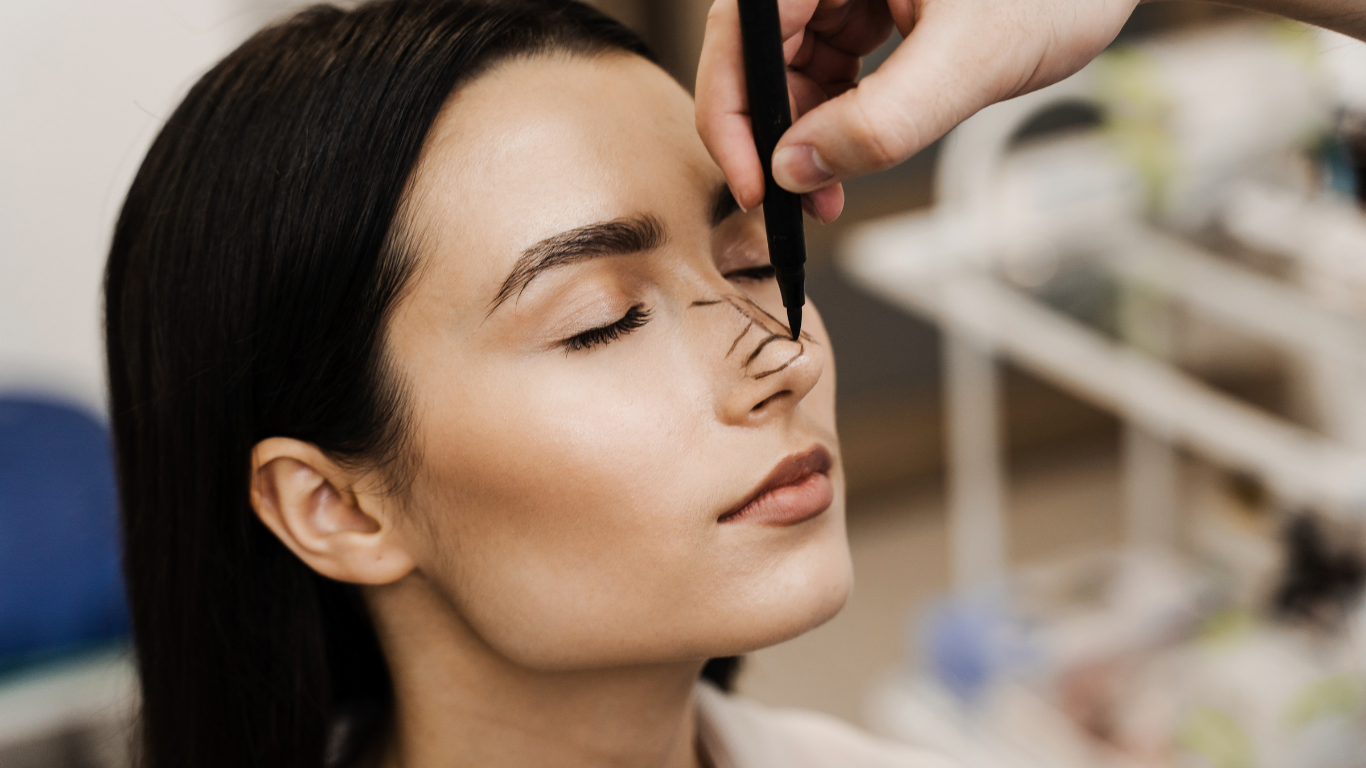
Facial harmony with rhinoplasty: subtle changes, great results

Date
The way we see ourselves profoundly influences how we feel. For many people, the nose plays a central role not only in the face, but also in the perception of identity, balance and trust.
When there is a disproportion, however minimal, it can alter complete facial harmony. Rhinoplasty for facial harmony it does not seek to transform who you are, but rather to refine what already makes you unique, achieving subtle changes that generate great results.
Under an artistic, precise and patient-centered approach, The Dr. César López Romero understands rhinoplasty as a dialogue between science and aesthetics. Each face tells a different story, and each surgery must respect it.
This comprehensive guide is designed to help you understand how rhinoplasty can balance facial proportions, what techniques exist, what the surgical process is like, and what to expect before and after surgery, so you can make an informed and safe decision.
Rhinoplasty for facial harmony: concept and objectives
La rhinoplasty for facial harmony is a surgical procedure that seeks to balance the nose with the rest of the facial features, respecting the patient's identity and prioritizing natural results. Unlike standardized approaches, this type of rhinoplasty is based on a complete facial analysis, where every angle, proportion and relationship between structures is carefully evaluated.
The main goal is not to have a “perfect nose”, but a coherent nose with eyes, lips, cheekbones and chin. When the nose is harmoniously integrated, the face is perceived to be more balanced, soft and expressive. In the hands of a surgeon with artistic vision, such as Dr. César López Romero, surgery becomes a tool to enhance natural beauty, not to impose a mold.
The importance of facial balance in rhinoplasty
Facial balance refers to the visual relationship between all facial features. No one should dominate or compete with others. A nose that is too prominent, wide or droopy can distract attention and alter the overall perception of the face.
During the preoperative evaluation, parameters such as nasal length, tip projection, width of the back and its relationship with the chin and lips are analyzed. These data make it possible to plan a surgery that harmonize the face without erasing personal identity. The result is improved symmetry, a more balanced distribution of visual focus, and an overall sense of facial coherence.
How the nose influences the proportion of the face
The nose occupies the central axis of the face and acts as a reference point for other features. Subtle changes in their shape can completely modify facial perception. Adjustments to the nasal dorsum, the tip or the wings influence the profile and the vertical ratio of the face.
There are key measures that guide the surgeon, such as the nasofrontal angle, the nasolabial angle and the projection of the tip. Modify these parameters precisely it can make the chin gain presence, make the cheekbones look more defined or make the smile look more balanced. On faces with a prominent nose, reducing the back can visually shorten the face. In small noses, improving projection can bring balance and character.
Natural and personalized results
One of patients' biggest fears is “having surgery”. Modern rhinoplasty, especially when it is aimed at facial harmony, aims for such a natural result that no one notices the surgery, only the improvement.
Personalized planning is key. Clinical photographs, detailed facial analysis and, in many cases, 3D simulations are used to visualize possible changes. These tools help align expectations and design a surgical strategy according to the patient's anatomy and wishes. Respect for ethnic traits, nasal structure and respiratory function is essential for achieving authentic and lasting results.
Rhinoplasty techniques and their role in facial harmony
The choice of surgical technique directly influences the aesthetic and functional result. There is no single method for all patients; each nose requires a specific approach.
Open rhinoplasty and closed rhinoplasty
Open rhinoplasty involves a small incision in the columella that allows a complete visualization of the nasal structures. This technique offers greater precision for working the tip, correcting complex asymmetries and placing grafts with accuracy.
Closed rhinoplasty is performed through internal incisions, with no visible scars. It is usually associated with less initial inflammation and is used in cases where the changes are more subtle. The decision between open or closed depends on the patient's anatomy, aesthetic goals and the surgeon's experience.
Bone and cartilage remodeling
Facial harmony is achieved through careful work on bone and cartilage. Osteotomies allow you to adjust the width and shape of the nasal bone, while the cartilaginous model defines the tip and provides structural support.
In many cases, cartilage grafts, obtained from the septum, ear or rib, are used to maintain shape and prevent long-term collapse. These structural techniques are essential for stable and natural results.
Integrated functional correction
Aesthetics should not compromise breathing. Therefore, rhinoplasty for facial harmony is usually combined with functional procedures such as septoplasty or the reduction of turbinates when necessary. In this way, the patient not only improves their appearance, but also their quality of life.
Surgical process: from evaluation to operating room
The success of rhinoplasty begins long before surgery. The initial evaluation includes a detailed examination of skin, cartilage, bone, and respiratory function. Medical history, previous trauma, and previous surgeries are also considered.
With this information, the surgeon designs a personalized surgical plan that defines techniques, times and care. Clear communication between patient and surgeon is essential for setting realistic expectations and building trust.
Simulation of realistic results and expectations
Digital simulations are a valuable tool for visualizing potential changes, but they are always explained as a guide, not as an exact promise. Factors such as skin quality, healing and individual response influence the final result.
The agreement on aesthetic and functional objectives, as well as the understanding of technical limits, are part of an ethical and transparent process that characterizes the practice of Dr. César López Romero.
Surgeon experience and long-term outcomes
Rhinoplasty is one of the most complex surgeries in plastic surgery. The surgeon's experience, training and artistic vision are decisive. A specialist with experience in rhinoplasty understands how small changes have major impacts on facial harmony.
In addition, post-operative follow-up is as important as the surgery itself. Controlling inflammation, evaluating healing and detecting any necessary adjustments to ensure stable and satisfactory long-term results.
Postoperative Care and Recovery
Recovery after rhinoplasty requires patience and discipline. In the first few days, rest, an elevated head and application of cold compresses to the periocular area are recommended. Avoiding efforts, shocks and the use of goggles on the nasal dorsum protects the newly remodeled structure.
The swelling decreases progressively during the first few months, although the final definition of the tip may take up to a year. Constant medical monitoring makes it possible to accompany this process and ensure that the evolution is as expected.
Long-lasting results and comprehensive well-being
When rhinoplasty is performed with proper planning, precise technique and correct care, the results are long-lasting. The nose integrates naturally with the face and aesthetic improvement is often accompanied by an increase in confidence and emotional well-being.
La rhinoplasty for facial harmony it's not just a physical change, but a transformative experience that connects image, identity and personal security.
Rhinoplasty FAQs for Facial Harmony
What makes rhinoplasty for facial harmony different from a traditional rhinoplasty?
Rhinoplasty for facial harmony focuses on the overall balance of the face, not just the nose. Analyze proportions, angles and facial relationships to achieve a natural and personalized result.
How long does it take to see the final result?
Although the initial changes are noticed within a few weeks, the definitive result may take between 9 and 12 months, especially in the definition of the nasal tip.
Can rhinoplasty improve breathing?
Yes. When combined with functional correction, surgery can significantly improve breathing by correcting septal deviations or other obstructions.
Are the results permanent?
In most cases, the results are long-lasting. Stability depends on the technique, tissue quality and postoperative follow-up.
When Precision Meets Harmony
Choosing a rhinoplasty is a deeply personal decision. When done with an artistic, safe and patient-centered approach, the changes can be subtle, but the impact is enormous. Rhinoplasty for facial harmony allows your face to look balanced, natural and true to your essence.
If you are looking for a result that combines medical precision, surgical safety and an artistic vision, the Dr. César López Romero accompanies you every step of the way, understanding your story, your expectations and your desire to look and feel better. Take the step towards facial harmony it's also an act of trust in yourself.