How to choose between a lift and a breast augmentation?
A breast lift seeks to correct the fall and restore firmness, while breast augmentation focuses on increasing volume through implants. Understanding these differences not only helps to set realistic expectations, but also to choose the ideal procedure based on each woman's anatomy, goals and lifestyle.
Dr. César López Romero, a certified plastic surgeon in Guadalajara, guides this process with a thorough evaluation and an aesthetic approach that seeks natural, proportionate and lasting results. This article delves into each procedure, its technique, recovery, indications and benefits, to provide a complete overview based on clinical experience.
Main differences between the two procedures
In this way, it all starts with understanding that both surgeries correct different aspects of the bust. The increase focuses on size and fullness, while the uprising restores firmness and a more youthful position. In a consultation, Dr. César López Romero evaluates the degree of sagging, the existing volume, the position of the areola-nipple complex and the final result that the patient wishes to achieve.
Breast augmentation doesn't eliminate sagging, and mastopexy doesn't add volume on its own. Therefore, although they can be performed independently, in many cases they work better in combination when there is volume loss accompanied by significant ptosis.
What is a breast augmentation?
Breast augmentation is a procedure aimed at improving the volume, projection and contour of the bust through the placement of implants. It is especially recommended for patients whose breasts are naturally small, who have lost volume due to pregnancy, breastfeeding, or weight loss, or who seek to improve mild symmetries.
Unlike a lift, augmentation does not reposition the nipple or correct marked fall. The main objective is to provide a larger size and a more rounded shape, especially at the upper pole of the breast. During the consultation, the surgeon analyzes the type of implant, its size, its internal coverage and the appropriate projection to harmonize with the chest and the general silhouette.
The implants can be placed under the muscle or the gland, depending on the thickness of the tissue, the anatomy and the desired results. This decision influences the naturalness of the result, the longevity of the implant and the recovery time.
What is a mastopexy?
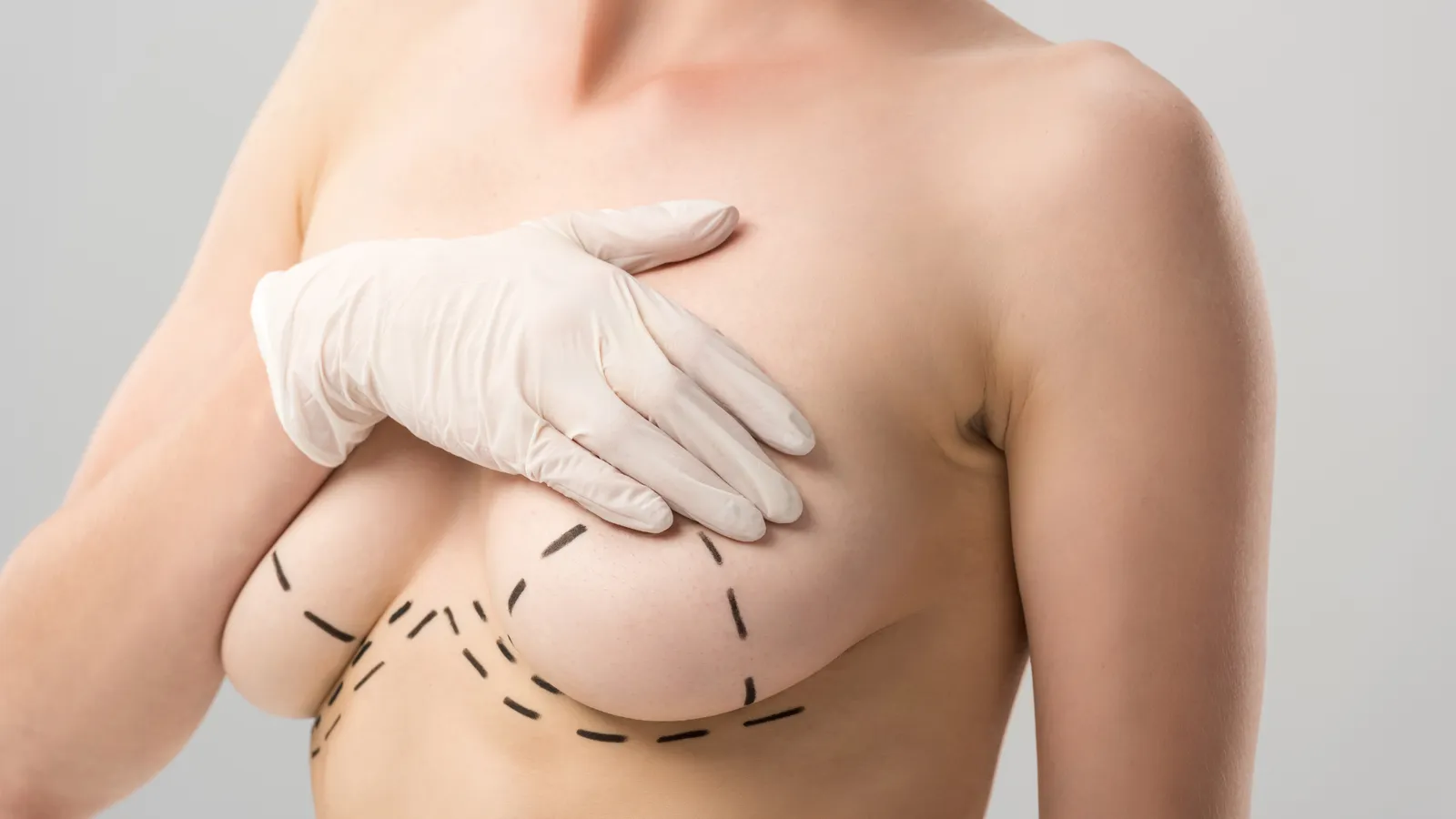
Mastopexy, or breast lift, is a surgery that restores firmness and position to the breasts when they have lost elasticity and are sagging. The procedure redefines the shape of the breast by removing excess skin, repositioning glandular tissue and elevating the areola-nipple complex to a more youthful position.
This procedure is ideal when the volume of the breast is adequate, but its shape has changed over time. It is also recommended when the nipples are oriented downwards or are located below the breast fold. Mastopexy can be performed with different incision patterns depending on the degree of ptosis, from a circle around the areola to vertical or anchor techniques.
Unlike breast augmentation, lifting does not increase breast size. However, in patients who have lost volume, it can be combined with implants for greater fullness and definition. The result is a better-shaped, firmer breast and a rejuvenated appearance.
Expected results and limitations of each procedure
Breast augmentation generates an immediate increase in size, projection and roundness. The results are usually noticeable from the first few days, although they stabilize as the implant adopts its definitive position. It is important to consider that augmentation alone does not correct the fall and does not reposition the nipple, so it is not recommended in cases of moderate or severe ptosis.
Mastopexy, on the other hand, provides a higher, firmer and more defined result, although it does not increase volume. Scars may be more visible than in augmentation, but they usually improve over time and with proper care. When combined with implants, a comprehensive result is obtained that provides volume and lift simultaneously.
Both procedures share the need for strict postoperative care and a period of adjustment, but mastopexy usually has a longer recovery due to greater tissue manipulation and the extension of incisions.
Ideal indications and candidates for each surgery
The choice between both procedures depends on the initial anatomy, the changes undergone in the bust and the aesthetic objectives.
The ideal candidates for augmentation Mammary glands are usually women who want to have larger breasts, who have lost fullness after pregnancy or weight loss, or who have slight asymmetries. The implant corrects the lack of volume and improves the projection without altering the existing structure.
Candidates for mastopexy usually have sagging, stretched skin, or low nipples. These patients are more concerned about shape than volume. If the patient is satisfied with the size of her breasts but wants a more youthful and firm appearance, lifting is the best option.
When there is a fall accompanied by a loss of volume, the combination of both techniques is ideal. In these cases, the surgeon analyzes elasticity, the amount of excess skin, and the ratio between volume and firmness to plan a safe and balanced procedure.
Surgical Procedure and Recovery
During breast augmentation, the surgeon makes a strategic incision that allows the implant to be placed according to the type of result sought. The procedure is shorter than a mastopexy and results in less scarring.
In the breast lift, the surgery is more detailed, since it involves the remodeling of tissues, the removal of excess skin and the repositioning of the nipple. The length of the procedure depends on the degree of ptosis and whether implants are added.
Recovery in both cases requires the use of postoperative support, hygiene care and adequate rest. Augmentation usually results in a faster recovery, while mastopexy requires more rest due to the extension of the incisions. Follow-up with Dr. César López Romero ensures that each stage of recovery is carried out safely.
Presurgical risks and considerations
Both breast lift and augmentation are safe surgeries when performed with a certified plastic surgeon. Even so, there are potential risks such as infection, changes in nipple sensitivity, or unfavorable scarring. In the case of implants, capsular contracture, ruptures or displacements may occur over time.
A detailed consultation allows you to identify risk factors and set realistic expectations. The surgeon's expertise, the quality of the materials and strict compliance with postoperative recommendations significantly influence the final result.
Aesthetic and functional factors to choose the best option
It is essential to consider the desired aesthetic result. Those looking to increase volume and achieve a fuller bust tend to prefer implants. Those who want to correct sagging and regain a more youthful shape usually opt for a breast lift.
Age, skin elasticity, amount of breast tissue, stable weight, and future pregnancies also influence the decision. In many cases, the combination of both techniques offers the greatest benefit, since it restores volume and corrects the fall at the same time.
Personalized planning is key, and therefore the Dr. César López Romero performs an evaluation comprehensive to design a surgical plan adapted to each patient.
FAQs
What's the difference between the two?
The augmentation helps to make the bust look bigger with implants, while the lift corrects the fall and repositions the chest without increasing volume. The choice depends on whether the primary goal is firmness, size, or both.
Is recovery different between the two procedures?
Yes. The augmentation usually has a faster recovery because it involves fewer incisions and tissue manipulation. Mastopexy requires more rest due to breast remodeling and the greater number of incisions.
How long do the results of each surgery last?
A breast lift can provide lasting results, although time and gravity can affect the shape. Implants have a lifespan of between ten and fifteen years and may eventually need replacement.
Is it possible to combine both techniques in a single surgery?
Yes, and this is a common option when there is a loss of volume accompanied by a fall. The combination allows for a fuller, more elevated and harmonious bust, although it requires careful planning.
What's the best option for you?
Choose between breast augmentation or breast lift requires a personalized evaluation that considers anatomy, aesthetic goals and lifestyle. Each procedure offers specific benefits, and in some cases their combination is the best alternative. With the guidance of Dr. César López Romero, it is possible to achieve a natural, proportionate and safe result that fully meets the patient's expectations.