Choosing a procedure to enhance breast volume is a deeply personal decision. Every woman has different expectations, needs, and anatomical characteristics, so there is no single solution that works for everyone. The most important thing is to understand the available alternatives and make a decision based on reliable information.
Currently, breast augmentation can be performed using two main techniques. The first involves the placement of breast implants, while the second uses the patient's own fat to increase volume naturally. Both options offer excellent results when selected correctly.
Beyond the desired size, factors such as chest shape, amount of breast tissue, availability of body fat, lifestyle, and aesthetic expectations influence the choice of procedure. A personalized assessment helps determine which alternative offers the greatest benefits for each case.
Dr. César López Romero guides each patient throughout this decision-making process, offering an individualized evaluation that prioritizes safety, body harmony, and natural results that respect each woman's anatomy.
What is breast augmentation?
Breast augmentation is a surgical procedure designed to increase volume, improve shape, and enhance breast projection.
In addition to aesthetic purposes, it can also be performed to correct asymmetries, restore volume lost after pregnancy or breastfeeding, or as part of breast reconstruction.
Currently, there are two widely used techniques: breast implants and autologous fat transfer.
Both procedures have similar goals but differ in technique, results, duration, and candidate profiles.
Breast augmentation with implants
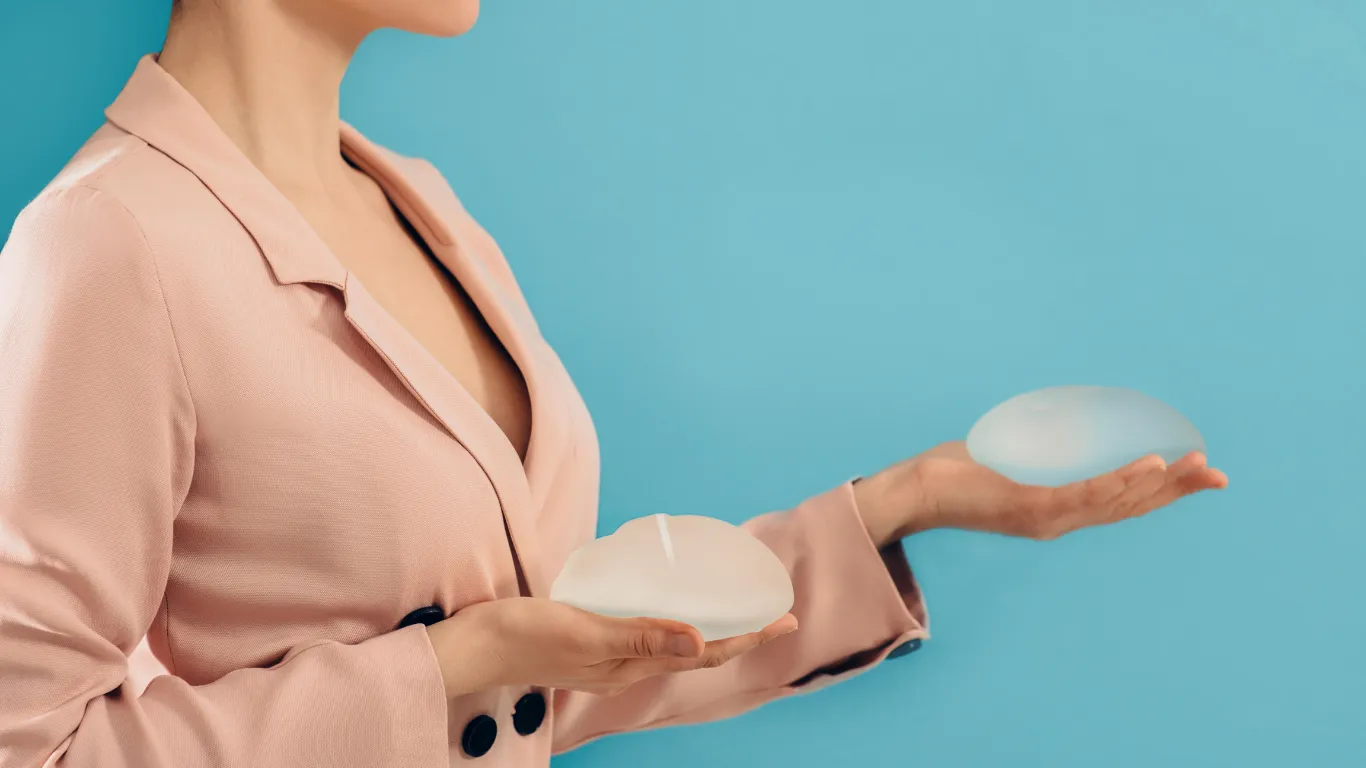
The use of implants remains the most common technique for breast augmentation worldwide.
During the procedure, the surgeon places a silicone prosthesis in a carefully planned position to achieve the desired volume and shape.
Depending on your anatomical features, implants can be placed under the breast tissue, under the pectoral muscle, or using hybrid techniques that combine both positions.
Surgery allows for significant changes in breast size and projection.
What is breast augmentation with fat transfer?
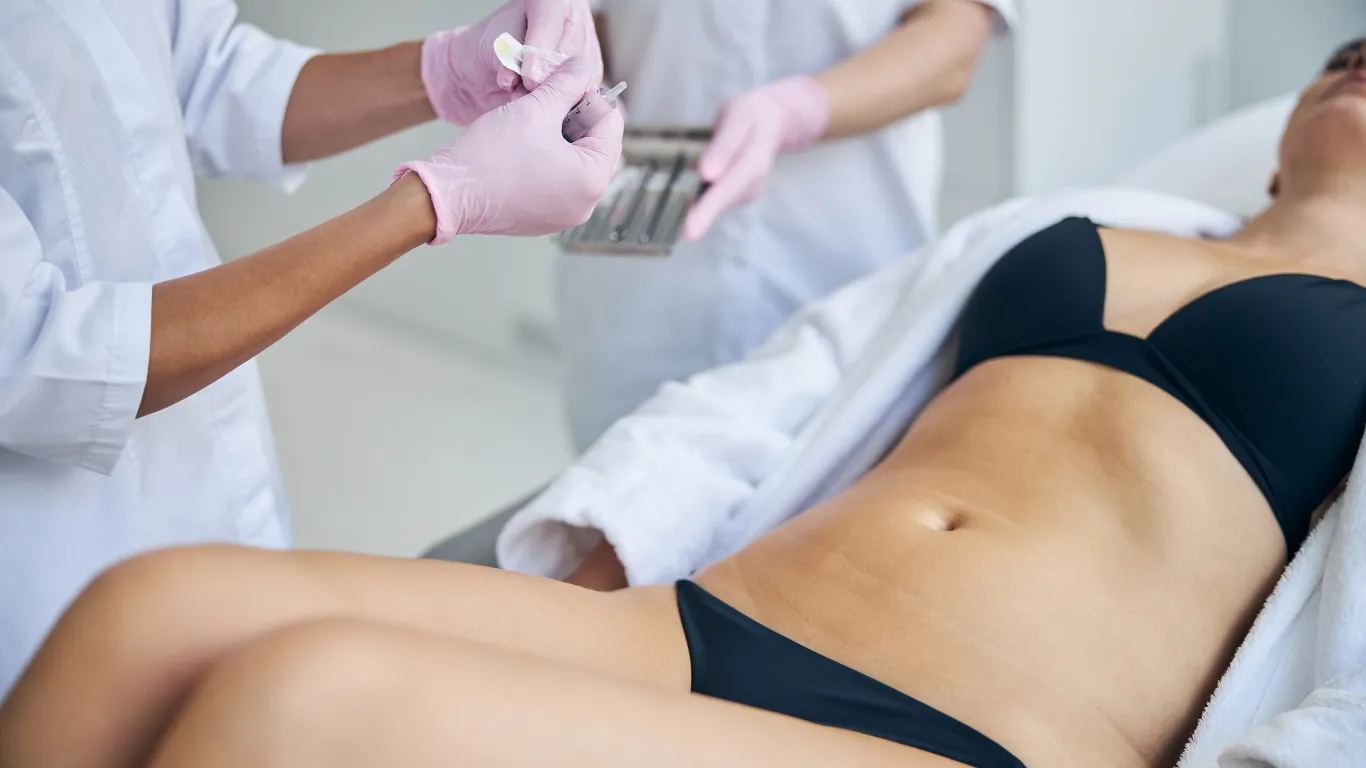
Fat transfer uses adipose tissue obtained from the patient herself through liposuction.
After the fat is extracted, it is carefully processed to select the cells with the best survival conditions.
It is then injected into different areas of the breast using small cannulas, aiming to increase volume and improve contour uniformly.
By using the patient's own tissue, the result offers a very natural texture.
How does fat transfer work?
Fat harvesting
The first stage involves performing liposuction in areas where there is fat accumulation, such as the abdomen, flanks, back, or thighs.
This provides an additional benefit by simultaneously improving body contour.
Tissue processing
The harvested fat is carefully cleaned to remove fluids, cellular debris, and other components that will not be used.
This process ensures that only viable fat cells are retained.
Application to the breasts
The surgeon distributes small amounts of fat into different planes of the breast tissue.
This technique promotes graft integration and increases the survival rate of the transferred cells.
Main differences between both techniques
While both procedures aim to increase breast volume, their results differ significantly.
Implants allow for more noticeable and completely predictable size increases.
Fat transfer offers a more moderate and natural enhancement, as some of the grafted tissue will be reabsorbed by the body during the first few months.
The choice depends primarily on each patient's aesthetic goals.
Aesthetic results
Breast implants
Implants allow you to increase several bra sizes and achieve greater breast projection.
They also offer a wide range of options in terms of volume, shape, and profile.
This makes it easy to fully customize the result.
Fat transfer
The increase obtained through fat is usually more subtle.
It generally allows for an increase of approximately one bra size, depending on the amount of available fat and graft survival.
The final appearance stands out for its softness and natural feel to the touch.
Naturalness of the result
Both procedures can offer natural results when properly planned.
Modern implants have a consistency very similar to breast tissue and allow for a harmonious appearance.
For its part, fat transfer uses your own tissue, so the feel is completely natural.
The surgeon's experience influences the naturalness of the result much more than the chosen technique.
Longevity of results
Implants offer long-lasting results.
Although they do not necessarily need to be replaced after a specific period, it is important to have regular medical check-ups to assess their condition.
Fat that successfully integrates into the breast tissue can remain for many years.
However, the final volume will depend on the number of fat cells that survive after the procedure.
Recovery
Recovery from breast augmentation varies depending on the technique used.
After implant placement, it is common to experience swelling, sensitivity, and a feeling of pressure during the first few weeks.
With fat transfer, there are two recovery zones: the areas where liposuction was performed and the breasts themselves.
In both cases, medical follow-up and adherence to recommendations promote a satisfactory recovery.
Who is a candidate for implants?
Implants are the best alternative for women who desire a significant increase in breast volume.
They are also ideal when there is little breast tissue or a very thin body frame that limits the amount of available fat.
Patients seeking highly predictable results usually benefit especially from this technique.
Who is a candidate for fat transfer?
Fat transfer is suitable for women who desire a subtle and very natural increase.
It is essential to have enough body fat to obtain the necessary tissue.
Additionally, patients must understand that some volume may decrease during the first few months due to the physiological reabsorption of some fat cells.
Can both techniques be combined?
Yes.
There is currently hybrid breast augmentation, a technique that combines implants with fat transfer.
Implants provide the primary volume, while fat is used to improve contour, soften the edges of the implant, and optimize the transition between the chest and the breast.
This combination can offer highly natural results for selected patients.
Advantages of breast implants
Implants allow for a significant increase in breast volume.
They offer stable and predictable results.
There is a wide variety of sizes, profiles, and shapes available to fully customize the procedure.
Additionally, it allows for the correction of significant asymmetries and the reconstruction of breast volume when necessary.
Advantages of fat transfer
The main advantage is the use of the patient's own tissue.
It does not require the placement of prosthetic materials and simultaneously improves body contour through liposuction.
The result offers a completely natural texture and small, virtually imperceptible scars.
Limitations of each procedure
Fat transfer has a significant limitation regarding the volume that can be achieved.
Furthermore, not all grafted fat survives, so additional sessions may be required in some cases.
Implants, on the other hand, involve a prosthesis that requires periodic medical check-ups and may eventually need revision surgery.
Understanding these characteristics helps you make an informed decision.
Factors to help you choose the best option
The decision should take multiple aspects into account.
Desired size, skin quality, initial breast volume, available fat, lifestyle, and personal expectations are all determining factors.
Consulting with a board-certified plastic surgeon allows you to analyze all these variables and design a completely personalized treatment plan.
The importance of an individual assessment
There is no universally superior procedure.
The best technique is the one that most appropriately addresses each patient's anatomical characteristics and goals.
During the assessment, the specialist explains the advantages, limitations, and expected results of each alternative to facilitate a safe and realistic decision.
Frequently asked questions about breast augmentation
Which procedure offers a more natural result?
Both can offer natural results. Fat transfer provides a completely natural texture, while modern implants also achieve a very harmonious appearance when selected correctly.
Does the transferred fat last forever?
A portion of the fat is reabsorbed during the first few months. The cells that successfully integrate into the breast tissue can remain for many years.
Do implants allow for a greater increase in breast size?
Yes. Implants offer a greater increase in volume and allow for more predictable results than fat transfer.
Is it possible to combine implants and fat?
Yes. Hybrid breast augmentation combines both techniques to achieve greater volume along with a more natural contour.
How do I know which option is best for me?
The choice depends on your aesthetic goals, your anatomy, the amount of available fat, and the plastic surgeon's recommendations following a personalized assessment.
Find the ideal breast augmentation for your body
Choosing between breast implants or fat transfer is a decision that should be based on your goals, your physical characteristics, and the results you wish to achieve. A breast augmentation is successful not only because of the technique used, but also because of personalized planning and the experience of the specialist performing the procedure.
Dr. César López Romero offers a comprehensive assessment to help you choose the alternative that best suits your expectations, always prioritizing safety, body harmony, and natural results. If you are considering enhancing your breast volume, schedule a consultation and receive professional guidance to make a decision with confidence.