Making the decision to have rhinoplasty isn't simply an aesthetic change, it's a profound step toward personal harmony. The nose, being in the center of the face, directly influences how we perceive ourselves and how others see us. Therefore, understanding every detail of the procedure is essential to feel safe before taking the plunge.
One of the aspects that generates the most doubts is the choice between closed or open rhinoplasty. Although both techniques seek to improve nasal shape and function, the way in which the surgeon accesses the internal structure makes important differences in the process and in the results. This decision is not trivial, as it influences surgical precision, recovery time and the type of changes that can be achieved.
In expert hands, such as those of Dr. Cesar Lopez Romero, rhinoplasty becomes a highly personalized procedure. Each face tells a different story, and each nose requires a unique approach. Therefore, beyond choosing a technique, the really important thing is to understand which one best suits the specific needs of each patient.
Throughout this article, you will discover in depth the differences between the two approaches, when each one is recommended and how proper surgical planning is key to obtaining natural, balanced and lasting results.
What is rhinoplasty and why are there different techniques?
Rhinoplasty is surgery that modifies the structure of the nose for aesthetic, functional, or both. It can correct visible imperfections, improve breathing or achieve greater facial harmony.
There are different techniques because not all noses have the same characteristics. Factors such as skin thickness, internal anatomy, surgical history and patient objectives determine the best approach.
In this context, the comparison emerges between closed vs open rhinoplasty, two surgical approaches that differ mainly in access to the nasal structures and in the level of visibility that the surgeon has during the intervention.
Closed rhinoplasty: technique and features
What is closed rhinoplasty?
Rhinoplasty Closed is performed through internal incisions, that is, inside the nostrils. This means that there are no visible scars on the outside.
Through these incisions, the surgeon works on bone and cartilage to modify the shape of the nose. Although access is more limited, it allows precise changes to be made in well-selected cases.
Advantages of closed rhinoplasty
One of the main benefits is the absence of external scarring. In addition, there is usually less post-operative swelling and a faster initial recovery.
Another advantage is that, in expert hands, it allows very natural results, especially when the required changes are not extremely complex.
When is it recommended?
Closed rhinoplasty is ideal for patients who need moderate corrections, such as reducing a nasal hump or slightly thinning the tip.
It is also a good option for those who seek a faster recovery and do not require extensive manipulation of the nasal structure.
Open rhinoplasty: technique and features
What is open rhinoplasty?
Open rhinoplasty involves a small incision in the columella, the area that separates the nostrils. This allows the skin of the nose to be lifted and the internal structures are fully exposed.
Thanks to this visibility, the surgeon can work with greater precision, especially in complex cases.
Advantages of open rhinoplasty
The main benefit is total control of the nasal anatomy. This facilitates the placement of grafts, the correction of asymmetries and the reconstruction of structures.
Although it leaves a scar, it is usually minimal and practically imperceptible over time.
When is it recommended?
Open rhinoplasty is used in more complex cases, such as significant deformities, secondary surgeries, or when a detailed modification of the nasal tip is required.
It is also the preferred technique when the internal structure of the nose needs to be reconstructed or reinforced.
Closed or Open Rhinoplasty: Key Differences
When analyzing the closed or open rhinoplasty, it is important to understand that it is not one technique that is better than another, but which one is more suitable for each case.
The main difference lies in surgical access. While the closed technique limits visibility, the open technique offers full exposure of the nasal anatomy.
In terms of recovery, closed rhinoplasty usually has less initial swelling, while open rhinoplasty may take longer for the swelling to completely disappear.
In terms of results, both techniques can achieve excellent results if applied correctly. The key is the surgeon's experience and prior planning.
The importance of personalized surgical planning
Beyond choosing between closed or open rhinoplasty, the real determinant of success is surgical planning.
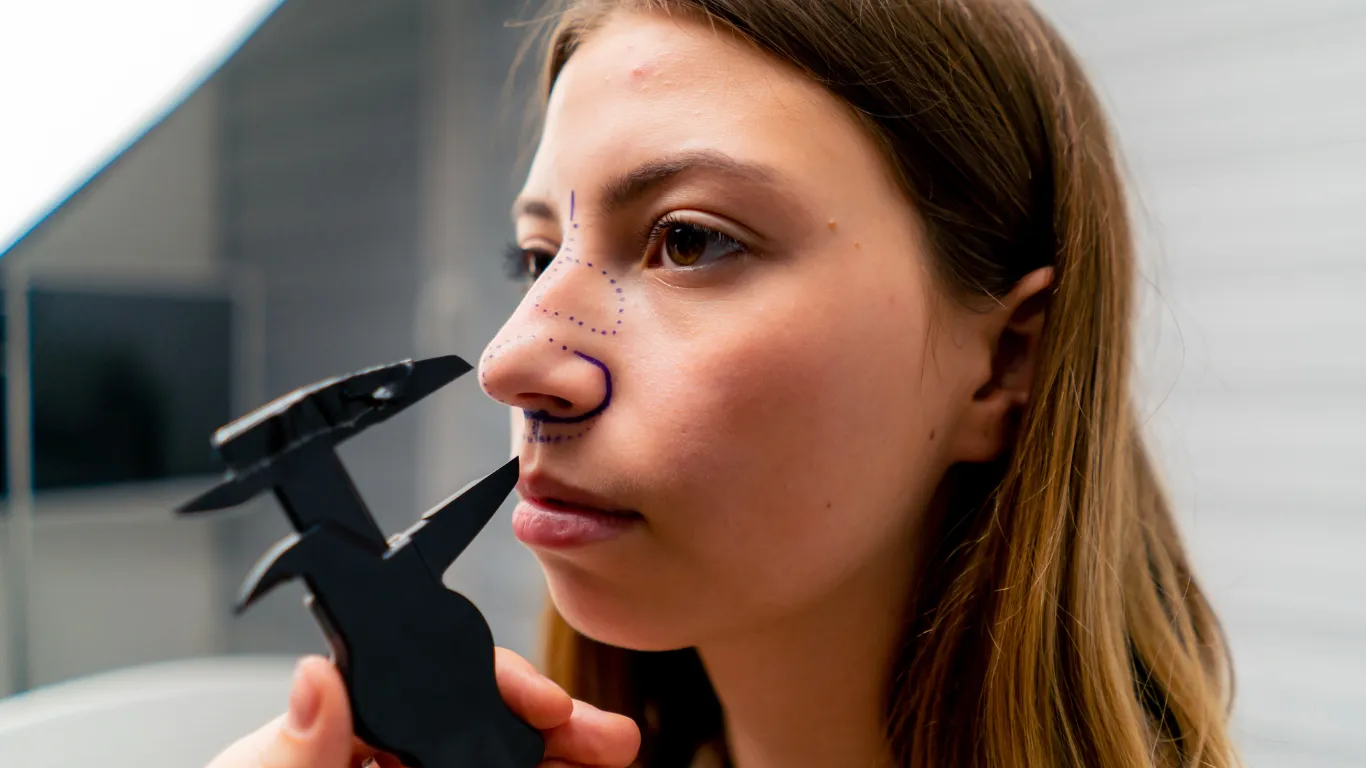
A detailed analysis of the patient's face, respiratory function and expectations allows us to design a precise strategy. In this process, the surgeon evaluates which technique offers greater safety, control and natural results.
Dr. César López Romero focuses on creating personalized surgical plans, where each decision is based on the patient's unique anatomy. This ensures that the changes are not only aesthetically pleasing, but also functional and harmonious.
Simulation technology and clear communication with the patient also play a key role in this process, as they allow us to align expectations and results.
Recovery and Results: What to Expect?
Regardless of the technique, recovery is a gradual process. The first few days usually include swelling and some bruising, which gradually diminish.
In closed rhinoplasty, initial recovery may be faster. In the open one, although the inflammation lasts longer, the final results may be more accurate in complex cases.
It is important to note that the definitive result may take several months to fully appreciate, especially on the nasal tip.
Patience and proper follow-up with the surgeon are essential to ensure a favorable development.
Factors that influence the choice of technique
The decision between closed or open rhinoplasty it does not depend solely on personal preference.
Factors such as the complexity of the case, the need for grafts, the thickness of the skin and whether it is a primary or secondary surgery directly influence the choice.
It's also important to consider the surgeon's experience, as not everyone is fluent in both techniques with the same level of precision.
Therefore, a professional assessment is essential to determine the most appropriate approach.
Closed vs Open Rhinoplasty FAQs
Does open rhinoplasty leave a visible scar?
The incision in the columella is very small and, over time, it usually becomes practically imperceptible. In most cases, it does not represent an aesthetic problem.
Which technique has the fastest recovery?
Closed rhinoplasty generally has a faster initial recovery, with less swelling in the first few days.
Are the results different between the two techniques?
The results can be just as natural in both techniques. The difference lies in the type of case and the precision needed to achieve the desired changes.
Is it possible to choose the technique freely?
Not always. The choice depends on the medical evaluation and the specific characteristics of each patient.
Which technique is best for secondary rhinoplasty?
In most cases, open rhinoplasty is preferred for secondary surgeries because of increased visibility and control.
Choose the best approach with confidence
Choose between closed or open rhinoplasty it is a decision that goes beyond the technical; it is a step towards a more secure and harmonious version of yourself. Understanding the differences and trusting a specialist is key to achieving satisfactory results.
El Dr. César López Romero understands that each patient has unique expectations and works carefully to design a personalized surgical plan that respects facial identity and improves nasal functionality.
If you're considering rhinoplasty, the first step is a professional evaluation. Making an informed decision will allow you to move forward with peace of mind and confidence towards the change you want.
Schedule your appointment and find out which option is best for you. Your well-being and safety start with the right choice.